

WHO's Air Quality Index Shows Life Expectancy in India Down by 4 Years
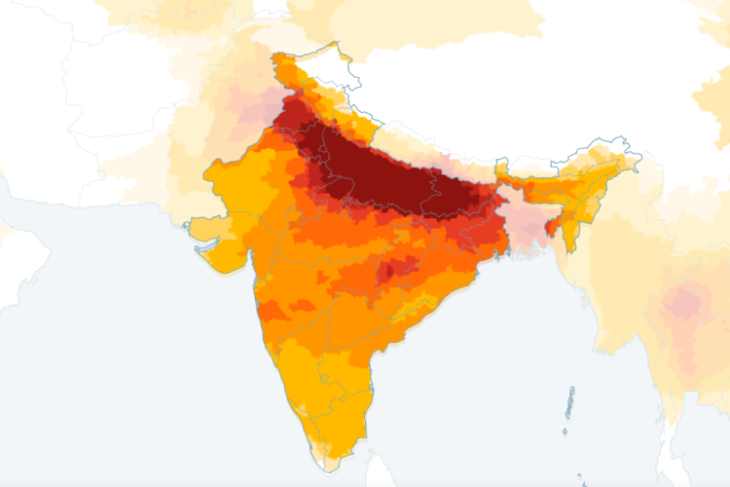
India is the world'south 2d well-nigh polluted land, slightly abaft just Nepal, the Energy Policy Plant at the University of Chicago (Epic) said on Mon.
Particulate pollution is and so severe that information technology shortens the average Indian'south life expectancy by more than than four years relative to what it would be if Earth Health System (WHO) air quality guidelines were met.
This is up from most two years in the late 1990s due to a 69 per cent increase in particulate pollution, information technology said.
Concentrations in Indian states of Bihar, Uttar Pradesh, Haryana, Punjab, and the National Capital Territory of Delhi are substantially higher, and the impact on life expectancy exceeds six years.
Its new air pollution alphabetize, known as the Air Quality Life Alphabetize (AQLI), finds that air pollution reduces global life expectancy by nigh two years, making it the single greatest threat to homo health.
The tool gives figures like — for an boilerplate resident of Delhi, gain in life expectancy if the WHO guidelines are met, could be upwardly to ten.2 years.
As well, it gives numbers of years lost to pollution for every district of Bharat for a span of 18 years between 1998 and 2016.
What makes AQLI unique is that it converts pollution into perhaps the most important metric that exists — life expectancy. It does so at a hyper-local level throughout the world.
Further, information technology illustrates how air pollution policies can increment life expectancy when they meet the World Health Organization's (WHO) guideline, existing national air quality standards, or user-divers air quality levels.
This data helps informing local communities and policymakers nigh the importance of air pollution policies in very concrete terms.
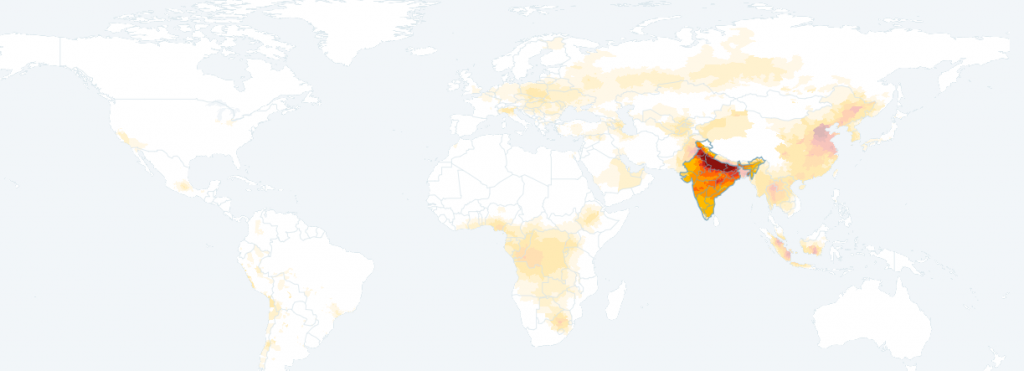
Loss of life expectancy is highest in Asia, exceeding six years in many parts of India and China; some residents of the United states still lose upwardly to a year of life from pollution.
Fossil fuel-driven particulate air pollution cuts global average life expectancy by i.8 years per person, according to the pollution index and accompanying report produced past the Epic.
"Around the earth today, people are breathing air that represents a serious risk to their health. Only the way this chance is communicated is very often opaque and confusing, translating air pollution concentrations into colors, similar red, brown, orange, and green. What those colors hateful for people'southward wellbeing has ever been unclear," Michael Greenstone, the Milton Friedman Professor in Economics and Managing director of the Ballsy, said.
Greenstone likewise noted: "My colleagues and I developed the AQLI, where the 'Fifty' stands for 'life' to address these shortcomings. It takes particulate air pollution concentrations and converts them into perhaps the most important metric that exists, life expectancy."
The AQLI is based on a pair of peer-reviewed studies co-authored by Greenstone that quantify the causal relationship between long-term human exposure to particulate pollution and life expectancy.
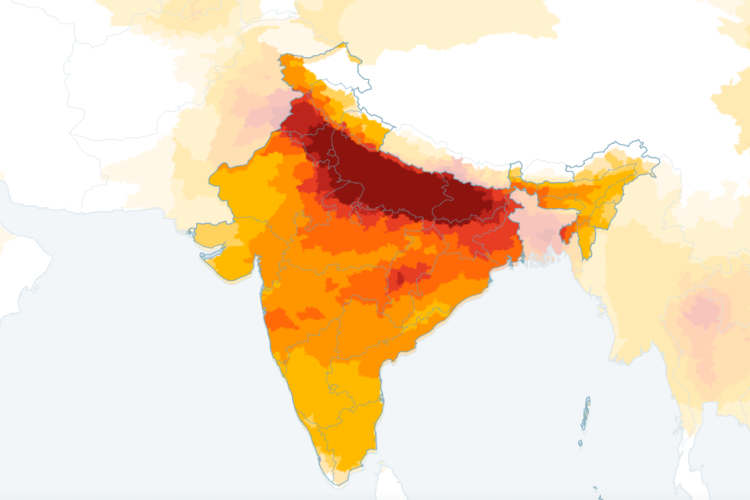
The results from these studies are then combined with hyper-localised, global particulate thing measurements, yielding unprecedented insight into the true cost of air pollution in communities around the globe.
Seventy-five per cent of the global population, or 5.five billion people, live in areas where particulate pollution exceeds the WHO guideline.
The AQLI reveals that India and Prc, which make up 36 per cent of the world's population, account for 73 per cent of all years of life lost due to particulate pollution.
On average, people in India would live 4.iii years longer if their country met the WHO guideline, expanding the average life expectancy at nativity there from 69 to 73 years.
In the United states, almost a third of the population lives in areas not in compliance with the WHO guideline.
Those living in the country'southward most polluted counties could expect to live up to one year longer if pollution met the WHO guideline.
Globally, the AQLI reveals that particulate pollution reduces average life expectancy by 1.8 years, making information technology the greatest global threat to human being health.
Past comparison, first-manus cigarette smoke leads to a reduction in global average life expectancy of near 1.6 years.
Other risks to human health take fifty-fifty smaller effects: booze and drugs reduce life expectancy by xi months; unsafe water and sanitation have off seven months; and HIV/AIDS four months.
Disharmonize and terrorism accept off 22 days. So, the impact of particulate pollution on life expectancy is comparable to that of smoking, twice that of booze and drug employ, iii times that of unsafe water, five times that of HIV/AIDS, and more than 25 times that of disharmonize and terrorism.
"While people tin stop smoking and take steps to protect themselves from diseases, there is little they can individually do to protect themselves from the air they breathe," Greenstone said.

Source: https://beebom.com/who-air-quality-life-index-india/
Posted by: felderpervage73.blogspot.com
0 Response to "WHO's Air Quality Index Shows Life Expectancy in India Down by 4 Years"
Post a Comment